
I want to share another aspect of LDS doctrine that left me feeling deeply betrayed. If this topic makes you uneasy, please feel free to scroll past. I understand that not every post resonates with everyone, but this discovery played a pivotal role in my journey toward understanding my personal truth. I welcome all comments and discussions, but I kindly ask that we engage with respect and kindness.
Let’s go back to January 2023. At the time, I was simply seeking to learn more, gain clarity, and become a better-informed member of the Church. During my exploration, I discovered something unexpected: the Gospel Topics Essays available on the LDS website and app. To my surprise, these essays were not new; they were first published by the Church back in 2013. Created to address complex and often controversial aspects of Church history and doctrine, the essays were approved by the First Presidency and the Quorum of the Twelve Apostles. However, they were quietly released without traditional announcements or media coverage, leaving many members—including myself—unaware of their existence for years.
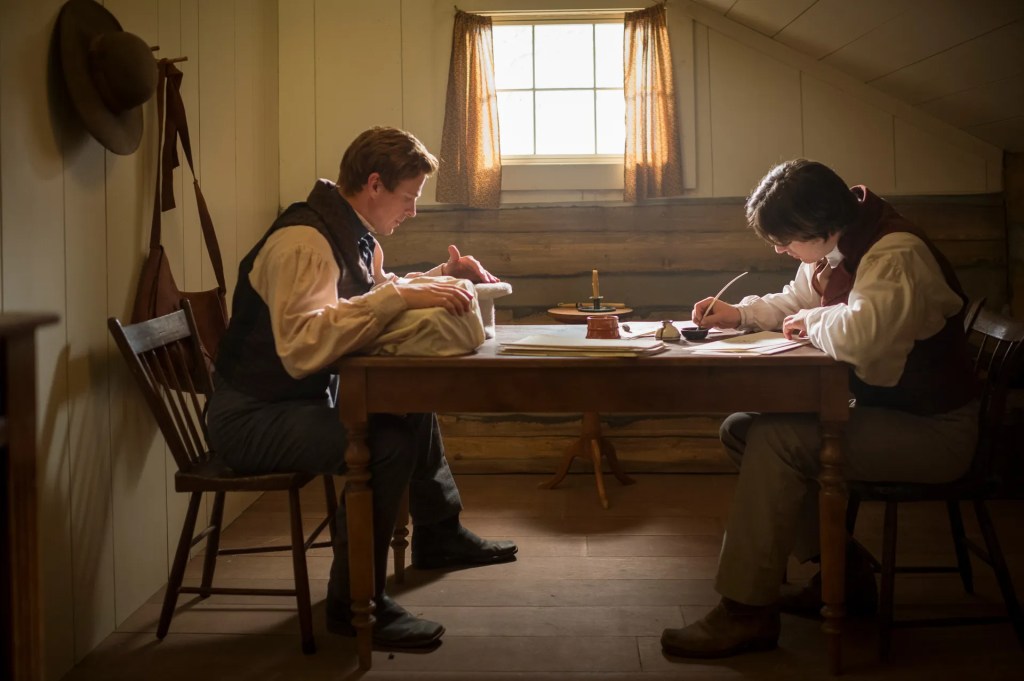
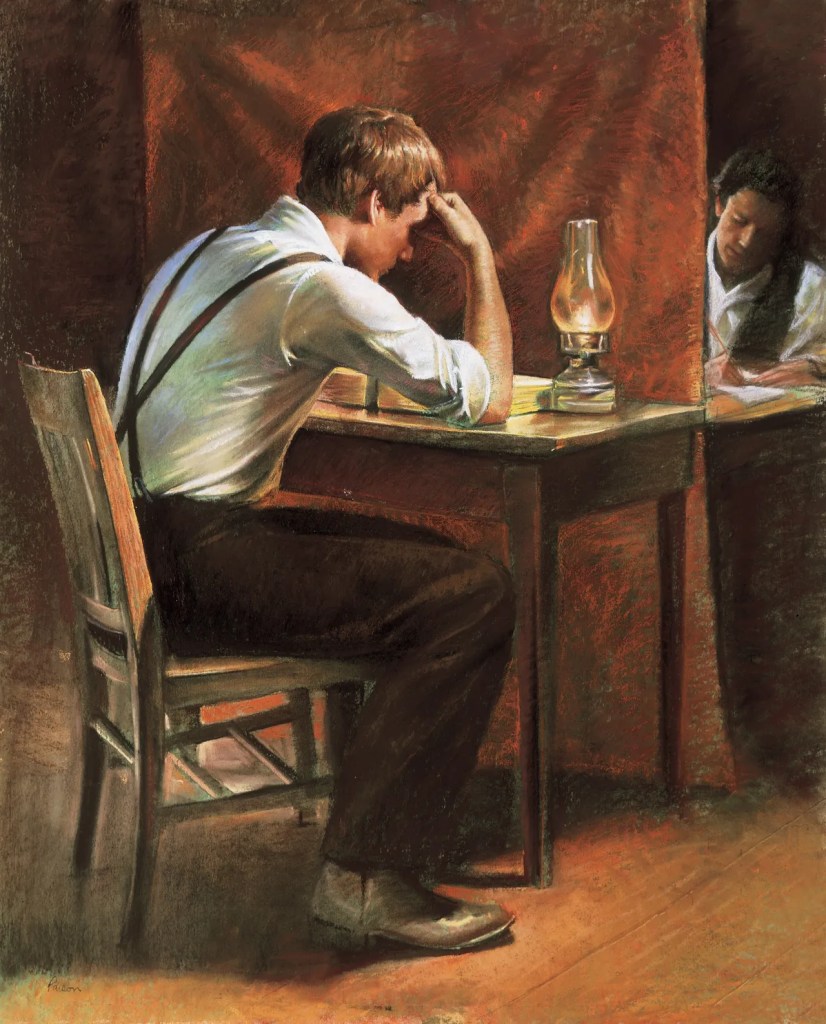
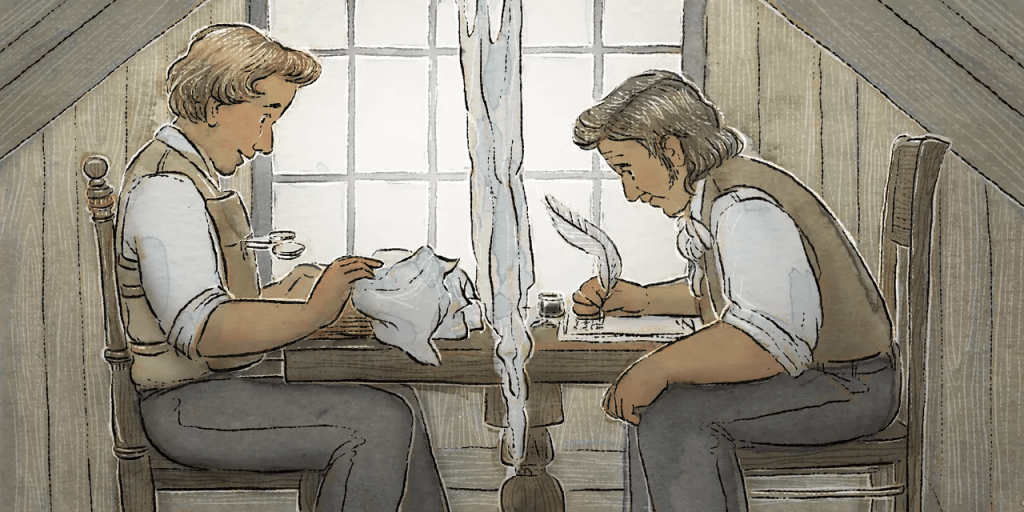
Today, I want to discuss the translation of the Book of Mormon. One Gospel Topics Essay, in particular, revealed a detail that caught me off guard: Joseph Smith’s use of a seer stone placed in a HAT to translate the Book of Mormon. For decades, I had been taught that Joseph translated the book using the golden plates, and the stone-in-hat method was never mentioned. To me, it felt as though the Church had deliberately minimized or ignored this part of the narrative. While this method had been referenced in material in the past labeled “anti-Mormon literature” and even depicted in a 2003 episode of South Park, the Church’s official artwork continued to show Joseph translating directly from the plates, not using a hat and stone. It’s telling that South Park, the Comedy Central cartoon, provided a more honest portrayal of Joseph Smith’s translation process than the LDS Church did in its manuals or chapel artwork. There is a significant issue when a satirical show presents more accurate information than the official narratives shared by the Church.
The Gospel Topics Essay in 2013 marked the first official acknowledgment of Joseph Smith’s use of the seer stone in a hat for translation. Despite South Park highlighting this detail in 2003 and even the PBS Frontline documentary “The Mormons” in 2007 touching on the hat translation process (a program I recall being discouraged from watching due to claims of its inaccuracy), the Church remained largely silent until years later. Ironically, after viewing this documentary recently, I can see why it was discouraged—it raised many questions the Gospel Topics Essays later aimed to address.
In 2020, the Church released a video titled “The Book of Mormon Is Tangible Evidence of the Restoration”, in which President Russell M. Nelson mentioned that Joseph Smith used a hat and seer stones for translation, explaining that Joseph placed the stones in the hat to better see the words. This was stated as if it had always been widely known and taught within the Church.
However, this shift in narrative raises significant questions. When did the Church transition from teaching that Joseph used the Urim and Thummim to this new account of using a seer stone in a hat? There was no formal acknowledgment or explanation for the shift; it simply appeared. The Church first released images of the seer stone in 2015, and since then, it has gradually introduced this version of events without addressing the earlier teachings.
This unannounced change has left many members feeling confused and betrayed. The Church even published articles blaming artists for inaccurate depictions of Joseph translating directly from the plates, deflecting responsibility despite having approved these representations. For members who were taught from childhood that the earlier narrative was complete and true, this sudden shift feels like a betrayal and raises doubts about the Church’s commitment to transparency and honesty.
Ultimately, the Church’s decision to downplay the seer stone and hat translation seems rooted in the desire to uphold a reverent story, manage public perception, and adjust to evolving historical transparency. While strides toward transparency have been made, the selective nature of disclosing such details has left many members, myself included, questioning the Church’s commitment to honesty and integrity. The feeling that the full truth was revealed only when unavoidable has led to confusion and frustration, as it contrasts with the Church’s teachings on truthfulness and integrity. For me, and for many others, this selective disclosure felt like a betrayal of those very principles.
Some church leaders and members may claim that it is strange for anyone to be surprised by the narrative shift, as if the rock-in-the-hat method was common knowledge all along. But it wasn’t. While it could be found by those who did deep dives into Church history, it was not part of mainstream teachings or discussions in Gospel Doctrine class, seminary or institute. The reality is that many members were not taught these details simply because the Church did not share them. Even the Church acknowledges this by introducing the Gospel Topics Essays and gradually adjusting the narrative and artwork to reflect a more accurate history. It isn’t bizarre that so many members were unaware; it’s a natural consequence of how the Church managed its teachings. For me, and many others, this selective disclosure feels like a betrayal of the principles of integrity and truth that we held dear. The journey to reconcile this has been difficult, but acknowledging these feelings is an essential part of seeking understanding and healing.
(For reference I do not own these photos but they were free to download from the LDS website. They are the only official depictions of the translation I could find on the website(searched on 11/24), there was not one showing him using the hat and stone.)

 Beyond The Spacious Building
Leave a comment